Widmark La Rosa
Computer Science & Mathematics student with experience building and fine-tuning deep learning and object detection systems. I have turned complex AI/ML theory into working, scalable implementations. I have extreme passion for AI and Machine Learning models and focusing to specialize in Computer Vision (CV) to work in the field of Autonomus Vehicles (AV).
My main goal in life, is to be part of something that changes the world, for good (of course).
Experience
- Designed and implemented a modular NLP summarization pipeline using Stanford CoreNLP and WordNet to extract key information from long-form academic documents.
- Built preprocessing and feature-engineering pipelines in ML.NET, improving experimentation efficiency and reducing document processing latency.
- Integrated tokenization, synonym expansion, POS filtering, and summarization logic into a cohesive workflow through iterative development cycles and code reviews.
Education
Strong foundation in CS, mathematics, and AI theory.
Machine Learning I · Artificial Intelligence · Statistical Computing with R · Data Structures · Linear Algebra · Statistics & Probability · Software Engineering · Computer Architecture & Operating Systems
Projects
Fine-tuned YOLOv11 for real-time cube detection achieving 85%+ confidence. HSV-based color recognition pipeline reconstructs cube state, then Two-Phase solver computes near-optimal solutions in under 20 moves.
Full Transformer architecture in PyTorch — self-attention, multi-head attention, positional encoding, and layer normalization. Supports text generation, classification, and translation. Achieved ~80% validation accuracy.
Automated lost item metadata extraction using YOLOv8 + BLIP-2/Qwen2 for vision-language captioning. Generates categories, titles, and descriptions automatically — reducing manual input by ~60–70%.
Research investigating Vision Transformers vs CNNs under limited data fine-tuning conditions. Implements a HuggingFace ViT training pipeline alongside a PyTorch ResNet-18 CNN and compares both architectures on performance, convergence speed, and data efficiency.
Neural networks built from the ground up in pure Python — no frameworks. Implements forward propagation, backpropagation, and gradient descent manually to deeply understand how math translates directly into code and how deep learning models actually learn.
End-to-end ML pipeline that predicts customer churn using real telecom data. Covers exploratory data analysis, feature engineering, model training and evaluation, and ships a Streamlit app for interactive inference and visualization.
Publications
Blog
This is a mix of personal blog and professional blog. You don't have to read these…

An Inevitably Self-Taught Life
Self-raised, self-taught, self-made. That's what the game is now.
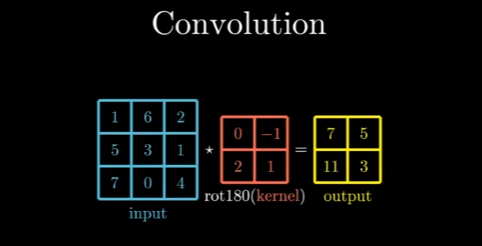
Convolutional Neural Networks
Represented as 2D but in reality is 3D, but in use is 4D.
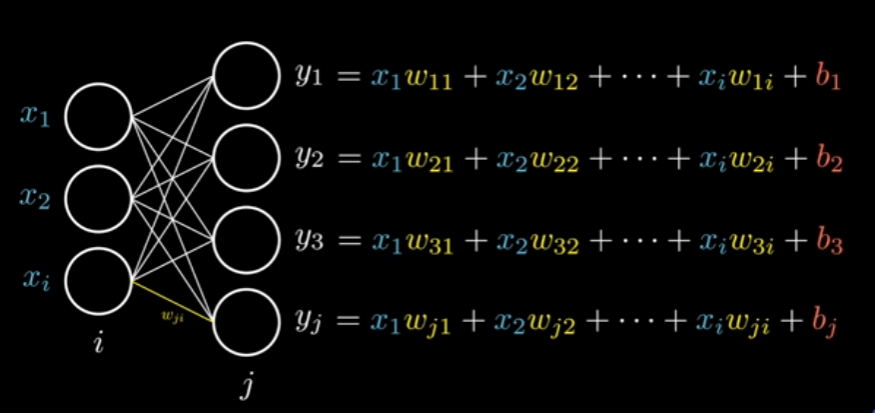
Neural Networks + Math Intuition
Understanding Neural Networks + Math Intuition, this doesn’t stick that fast so don’t worry.

How I Built a Rubik's Cube Solver with YOLO and OpenCV
I have always been a casual fan of Rubik's Cubes, and always interested in Computer Vision, so I decided to join these two.
Contact Me
If you want to contact me or stalk me, here you can.